Bigly trumping the world

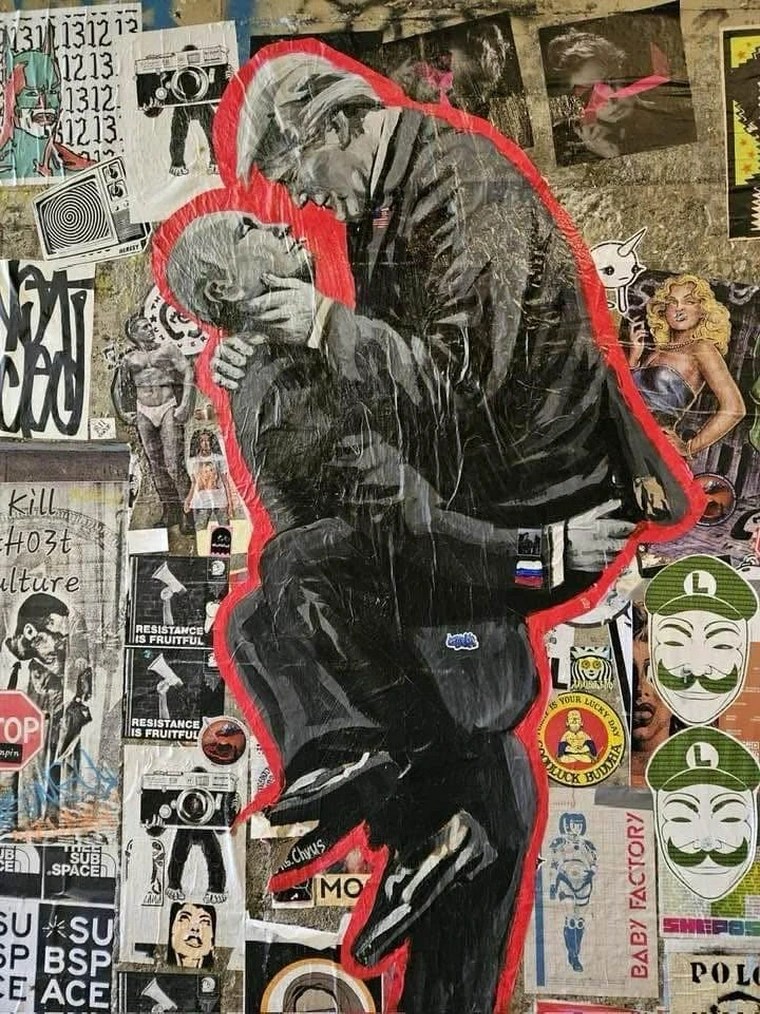
Today (4 March 2025) Trump put into effect his threats to withdraw military support from Ukraine and impose steep tariffs on Canada, China and potentially Mexico. Following reaction from Europe, Trump’s vice-president J.D.Vance described the UK as “some random country that hasn’t fought a war for 40 years”.  Such a derisive opinion of a supposed ally ill behoves the vice-president of a country that Ronald Reagan called a beacon of freedom.  But it’s the kind of talk from Trump and his acolytes we’ve become used to.   Trump’s recent attack in the Oval Office on the President of Ukraine demonstrated (not for the first time) that he has no interest in behaving presidentially as the leader of a democratic country. The most astonishing evidence of this was January 6th 2021, when he effectively led an assault on the US Capitol, the building that represents his system that had elected him president. Evidently, he felt a need to sabotage the political and system he formally upheld.

Such ambivalence is characteristic of a personality type that was defined at the end of the second world war by Theodore Adorno and other members of the Frankfurt Group of social scientists.  Their groundbreaking work The Authoritarian Personality (1950) – along with works by associates such as Erich Fromm’s (1942) Fear of Freedom – was widely read during the 1950s and 1960s as the world tried to understand the horrors of fascism: Hitler, Nazism, and the Holocaust.  Adorno and his mainly Jewish colleagues argued that people whose dynamism and initiative are thwarted by familial, social and economic experience may develop a personality fixated on power.  This authoritarian/fascist personality displays both sadistic and masochistic traits: both the desire for conquest and control and the desire to submit.  

By all accounts, Trump’s father was a dangerous role-model who displayed contempt for “weakness” in his personal and business affairs.   He bullied and exploited business partners, employees and tenants, especially people of colour and other “minorities”.  Trump himself suffered and learned from this cruelty.  He survived by providing himself with the brittle assurance and confidence his father exhibited.  His speeches are loaded with repeated claims of achievement: he is a very stable genius who recruits the best people and has the highest ratings.   He has learned to lie so naturally that he has almost convinced himself. His mythically “successful” career has been built on terrorising others. His hold over the men who form the majority gender in the Congress Republican Party, not to mention the millions who form his base, derives from their parallel pathology: their desire to be, and to be led by, a “strong man”.   J.D.Vance, who joined Trump in bullying Zelensky, is an example.   These traits are redolent of the masculinity cult of Andrew Tate. 

Lie and bluster as he will, Trump’s deeper desire for the support his father denied him is unabated.  There is much speculation about Putin’s hold over Trump, but, whatever the history, Putin is clearly Trump’s father-figure: distant and cruel like his father, but possessed of enviable power.  The danger of the current situation is that Trump’s pathology transcends other loyalties and boundaries.  He has often stated his contempt for soldiers and others who are prepared to fight and die for what they believe.  He has no belief except in power.  Like a Mafia gangster, he accused Zelensky of disrespect.  Zelensky’s courage means nothing; he is the weak player in this game, and must be abandoned if he will not allow Ukraine to be exploited by the US and Russia.  In Trump’s fantasy world of power, he will become leader of an empire including Canada and Greenland, while Putin can possess Ukraine and other Baltic states.  They will be partners in ultimate global power.  

The tragedy is Trump’s and the world’s. We are all endangered by a deeply wounded and dangerous individual who should never have got anywhere near the presidency and is living out his childhood trauma at global cost. 

Virtual Reality

VR-1

Virtual reality is making a comeback, said Mandy Rose, Senior Research Fellow at the Bristol Digital Cultures Research Centre, introducing New Media artist Oscar Raby to a packed audience on 24 October at the Pervasive Media Studio. Heralded in the 1980s by Timothy Leary and others as a new form of experiential connectivity, VR’s early manifestations failed to meet expectations and it was sidelined by the rapid development of the World Wide Web. However, technical developments and the enthusiasm of a new generation of media artists have made for a resurgence of immersion in a technologically mediated reality. Oscar Raby’s Assent is (in the words of Rose) “one of only a handful of projects that currently sits at the intersection of documentary, interactivity and virtual reality”.

After the military took control of Chile in the coup of September 1973, a “Caravan of Death” travelled the country by helicopter, conducting executions of military detainees. According to Oscar Raby, this was a mechanism to instil terror into the community. It was also a way of demonstrating the force of the central authorities to military staff outside the capital, and, by making them complicit in the actions of the junta, to ensure their loyalty. Oscar explains that his autobiographical immersive documentary “puts the user in the footsteps of my father, who in 1973 was a 22-year-old army officer stationed in the north of Chile, on the day when the Caravan of Death came to his regiment. By putting the audience on the scene alongside my father using virtual reality technology, Assent provides the audience an opportunity to engage personally with the events and emotions of that day, through his eyes, and mine”.

After attending an introductory talk by Oscar, I had the opportunity to experience Assent. The Oculus Rift viewing equipment was a black box resembling a pair of covered, chunky binoculars that covered my eyes and was held to my head by an elastic strap, augmented by a pair of stereo headphones. It was not very large but was initially slightly uncomfortable. Throughout, I retained my sense of being grounded, sitting in a chair in the Pervasive Media Studio; if I moved my eyes downwards, I could see a chink of daylight. Nonetheless, the virtual reality experience was unique and extraordinary.

After a brief introductory warning text about the experience to come, I found myself in Oscar’s studio. I could look all around, at the walls, floor and ceiling, and everything was there. There appeared to be an overhead projector on the floor; several paintings displayed on the walls; chairs and tables; and lights hanging from the ceiling. As my friend Terryl Bacon, who also viewed the presentation, pointed out, this immersion experience was very unlike participation in a computer game: it was contemplative. Suddenly, Oscar appeared, standing in the room. He was flat and immobile, like a cardboard cut-out; this was the appearance of all the characters that appeared in the presentation. He spoke to me as his father: he said that he thought I might have found the equipment hard to manage, and was glad I was there. You can hear this part of the presentation in the first part of the trailer.

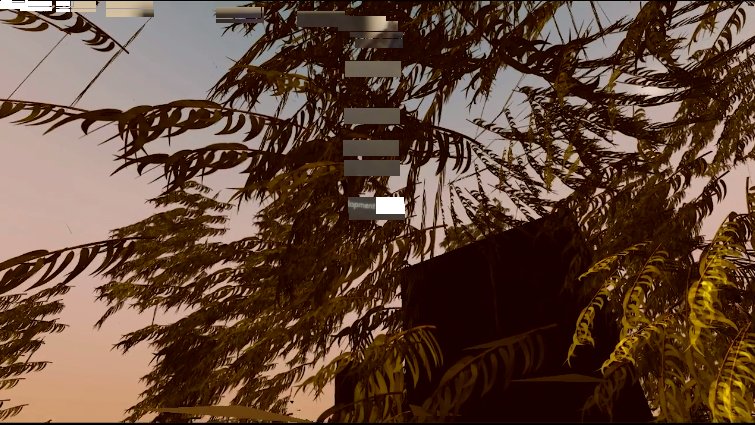
Speaking as to his father, the virtual Oscar told me that he was going to take me back to that day in 1973 when I witnessed the execution of a group of prisoners captured by the military regime in Chile. The scene changed to a well-realised three-dimensional representation of a field with low hills in the background. Oscar’s recorded voice told me to look intently at two figures in the distance. This action took me rapidly towards the figures, one of whom was Oscar. He continued the story suggesting that this time I could take more time than I was able to do on that fateful day in 1973. I wanted to take time, and enjoyed looking carefully at the features of trees that moved three-dimensionally through space as I turned towards them. But I was disturbed by the fact that I couldn’t see my feet. I looked down. I felt as if I was in the scene but I wasn’t there. VR-2But there was little time to reflect on this, as soon we were carried forward through the leaves and branches of three-dimensional woodland to the scene of execution, represented by a number of figures, two of whom resembled Oscar and his father. A rifle cracked intermittently and the figures became grossly distorted. I am not sure whether the presentation suffered a glitch at this point or whether I failed to pause the programme by looking intently at the figures; Terryl tells me that she was able to look at them for a while and to see sky through their mouths and eye-sockets. The presentation finished and the real-life Oscar removed my headphones and viewing equipment.

I sat, moved by the horror of the execution and by the extraordinary three-dimensional experience in which I had been immersed. I didn’t know what to say, and there were people waiting to engage with the experience; so I told Oscar that I would write to him. This blog is my response.

A disturbing and provocative aspect of this virtual reality experience was the conflict between participation and passivity. At the beginning, when I appeared to be inside Oscar’s studio and could look wherever I wanted, I felt master of the situation. But, as the story unfolded, I became aware that the scope of my participation was extremely limited. As Oscar said in his introductory presentation, the viewer is on a track. Indeed, I could not change the events at all, beyond spending a longer time looking at the landscape than Oscar’s father would have done on that traumatic day. As I say, I may have failed to manage the last part effectively, but I did not see the death squad; I saw only the distorted bodies of a few soldiers and civilians. The last part of the presentation resembled the shocking climax of a movie that I could only watch. The effect was similar to the last part of the trailer.

On reflection, I think that reasons for the experience of the last part of the programme may have to do with the artist’s difficulty in rendering the execution, even though he has been in conversation with his father about it for over twenty years. Although the viewer is put in the position of Oscar’s father, the actual moment of execution is elided from this immersive virtual reality. The artist’s agony over his father’s participation may be suggested by the presentation’s title, Assent.

The question that arises for me is: can a VR presentation do more than add a further dimension of immersion to the viewing experience? Can the viewer’s contemplation change the experience, or bring a new perception to it? Or is even the experience of immersive reality inevitably confined by the artist’s conceptualisation?

The Male Line

Image


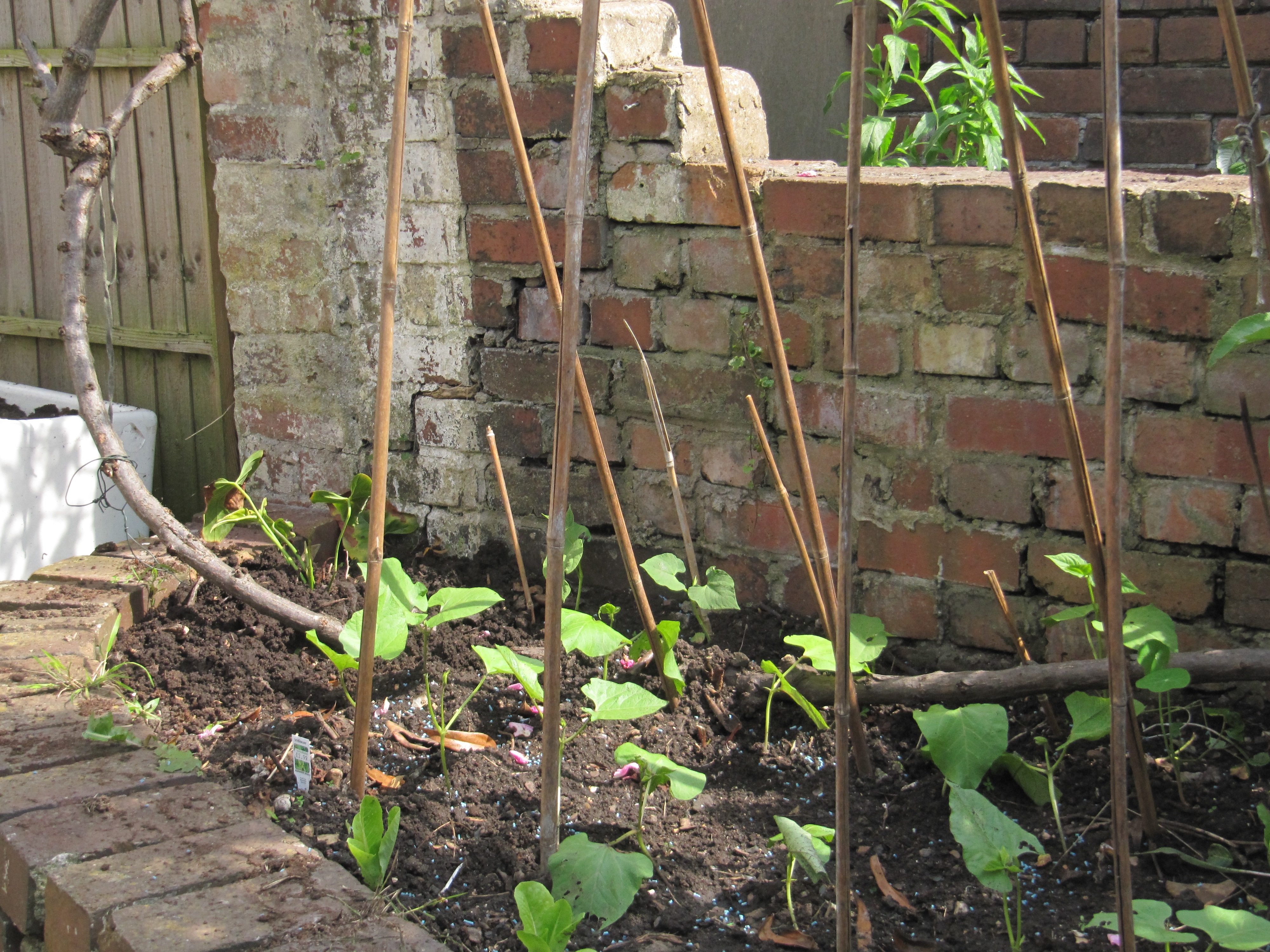
My father grew runner beans every year

in our suburban garden. Twenty plants saluted

each other, regularly apart. Too bright

for army green, their densely orange flowers

heralded dangling pods of seeded sustenance.


Today I grow beans in my urban garden.

The parade is shorter, but the line

stretches across the earth. Young green soldiers

stand waiting to climb their way to planthood.