Bigly trumping the world

Today (4 March 2025) Trump put into effect his threats to withdraw military support from Ukraine and impose steep tariffs on Canada, China and potentially Mexico. Following reaction from Europe, Trump’s vice-president J.D.Vance described the UK as “some random country that hasn’t fought a war for 40 years”.  Such a derisive opinion of a supposed ally ill behoves the vice-president of a country that Ronald Reagan called a beacon of freedom.  But it’s the kind of talk from Trump and his acolytes we’ve become used to.   Trump’s recent attack in the Oval Office on the President of Ukraine demonstrated (not for the first time) that he has no interest in behaving presidentially as the leader of a democratic country. The most astonishing evidence of this was January 6th 2021, when he effectively led an assault on the US Capitol, the building that represents his system that had elected him president. Evidently, he felt a need to sabotage the political and system he formally upheld.

Such ambivalence is characteristic of a personality type that was defined at the end of the second world war by Theodore Adorno and other members of the Frankfurt Group of social scientists.  Their groundbreaking work The Authoritarian Personality (1950) – along with works by associates such as Erich Fromm’s (1942) Fear of Freedom – was widely read during the 1950s and 1960s as the world tried to understand the horrors of fascism: Hitler, Nazism, and the Holocaust.  Adorno and his mainly Jewish colleagues argued that people whose dynamism and initiative are thwarted by familial, social and economic experience may develop a personality fixated on power.  This authoritarian/fascist personality displays both sadistic and masochistic traits: both the desire for conquest and control and the desire to submit.  

By all accounts, Trump’s father was a dangerous role-model who displayed contempt for “weakness” in his personal and business affairs.   He bullied and exploited business partners, employees and tenants, especially people of colour and other “minorities”.  Trump himself suffered and learned from this cruelty.  He survived by providing himself with the brittle assurance and confidence his father exhibited.  His speeches are loaded with repeated claims of achievement: he is a very stable genius who recruits the best people and has the highest ratings.   He has learned to lie so naturally that he has almost convinced himself. His mythically “successful” career has been built on terrorising others. His hold over the men who form the majority gender in the Congress Republican Party, not to mention the millions who form his base, derives from their parallel pathology: their desire to be, and to be led by, a “strong man”.   J.D.Vance, who joined Trump in bullying Zelensky, is an example.   These traits are redolent of the masculinity cult of Andrew Tate. 

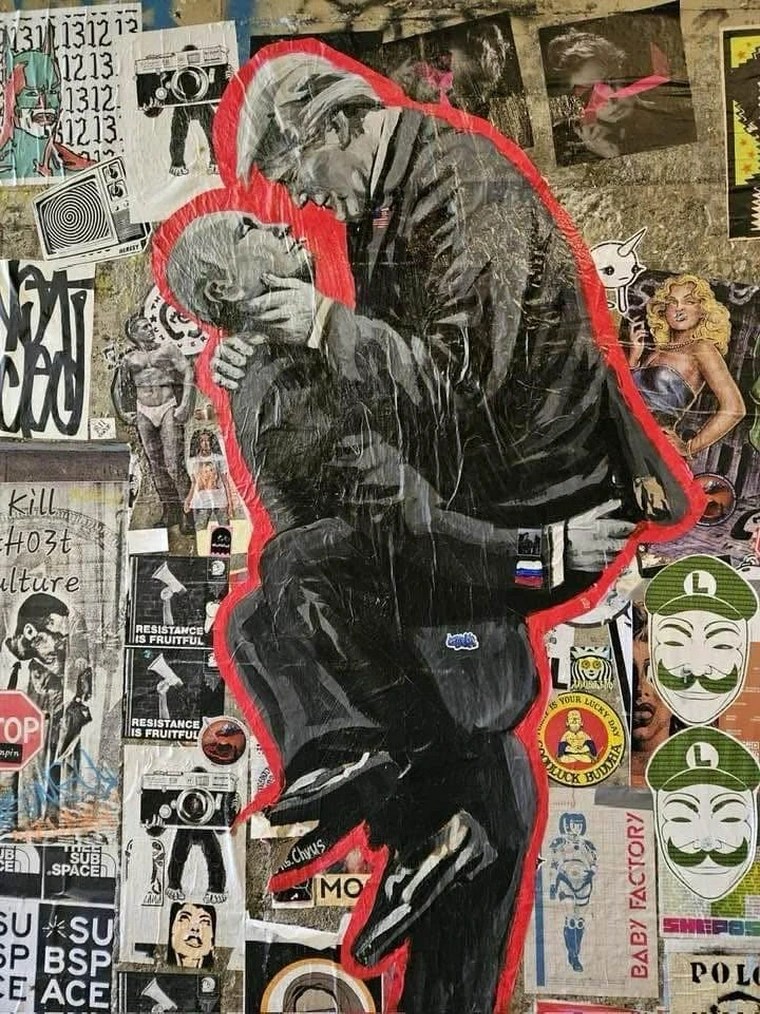
Lie and bluster as he will, Trump’s deeper desire for the support his father denied him is unabated.  There is much speculation about Putin’s hold over Trump, but, whatever the history, Putin is clearly Trump’s father-figure: distant and cruel like his father, but possessed of enviable power.  The danger of the current situation is that Trump’s pathology transcends other loyalties and boundaries.  He has often stated his contempt for soldiers and others who are prepared to fight and die for what they believe.  He has no belief except in power.  Like a Mafia gangster, he accused Zelensky of disrespect.  Zelensky’s courage means nothing; he is the weak player in this game, and must be abandoned if he will not allow Ukraine to be exploited by the US and Russia.  In Trump’s fantasy world of power, he will become leader of an empire including Canada and Greenland, while Putin can possess Ukraine and other Baltic states.  They will be partners in ultimate global power.  

The tragedy is Trump’s and the world’s. We are all endangered by a deeply wounded and dangerous individual who should never have got anywhere near the presidency and is living out his childhood trauma at global cost. 

When Milton met Galileo

Hart, Solomon Alexander; Milton Visiting Galileo when a Prisoner of the Inquisition; Wellcome Library; http://www.artuk.org/artworks/milton-visiting-galileo-when-a-prisoner-of-the-inquisition-125949

I’m delighted to reblog this post by Josie Holford, who brings the past to bear on the present with such erudition. One of the commentators on her original blog pointed out that in Hart’s painting Galileo appears to be using a mobile phone and an iPad! He was indeed ahead of his time. And as Josie concludes, recent events in the UK, the US, and other English-speaking countries around the world suggest we could also do with a dose of Milton in the public arena. 

Josie writes:

I chanced upon this painting of the meeting between Galileo and John Milton and had a flashback to undergraduate days and the anthology we were required to buy and lug around (and possibly read.) It was  American, very heavy, very expensive, and full of all kinds of interesting but rather dense texts. I remember the…

When Milton met Galileo — Rattlebag and Rhubarb

Pro-life Wyoming

Reading that Wyoming is the first state in the US to ban the sale of pills to induce an abortion, I stopped short.  Wyoming?    I know virtually nothing about Wyoming apart from its location in the high American west.   But in my imagination it is a state of vast plains, mountains and ranches, a landsape populated with thousands of moving heads of cattle herded by cowboys with wide hats and smart boots.   Do they have women there?

As a child in the 50s and 60s, my daily evening and Saturday afternoon television viewing was filled with American cowboy shows.  The Lone Ranger, Rawhide, Have Gun will Travel, Champion the Wonder Horse, Lassie, Bonanza,  The High Chapparal, Cheyenne, Fury, Gunsmoke (retitled Gun Law for the UK), The Virginian, Wells Fargo, Gunslinger … I can still hear their themes:

Gunslinger, ride on,

Gunslinger, ride on,

Gunslinger, ride away.

The predominant character in most of these series was the lone male, although in some (such as Bonanza) the figure was the patriarch of the ranch.  But women were definitely in a minority.  They were the herder’s dream as he crossed the plain:

All the things I’m missin’

Good viddles, love and kissin’

Are waitin’ at the end of my ride.

The rider was a figure of masculine loneliness and liberty, so it is initially hard to think of Wyoming as a state concerned with policing women’s bodies – but not surprising, given the complex meanings given to gender and sexuality in contemporary USA.   Ron de Santis, governor of Florida, has recently blamed the failure of the Silicon Valley Bank on diversity initiatives.  “They’re so concerned with (diversity, equity and inclusion) and politics and all kinds of stuff. I think that really diverted from them focusing on their core mission,” he told Fox News.  Making money requires masculine enterprise untrammelled by concerns for equality.   But Florida, with an economy based on agriculture, tourism, real estate and retirement,  has little similarity with the mythical American west, unless we consider its recent history of mass shootings. 

Georgia is arguably different.   Its craziest Trump-following politician, Marjorie Taylor Greene, has recently claimed that electric cars are emasculating the American way of driving.  In “Georgia on my Mind”, Ray Charles finds “peace …  girly”, and the state boasts Billy the Kid as a folk hero.  But abortion law in Georgia is currently much contested.  During Georgia’s November U.S. Senate contest between Democrat Raphael Warnock and Republican Herschel Walker, two women accused Walker, who opposes abortion, of paying for them to have the procedure.   The state seems poised between gender-related concepts of freedom and liberty. 

But Wyoming?   Its very name conjures cattle and cowboys roaming over wide open plains.  It may be a while before Wyoming women stake their claim on the reproductive frontier.   

Welcome to GrAIt Britain

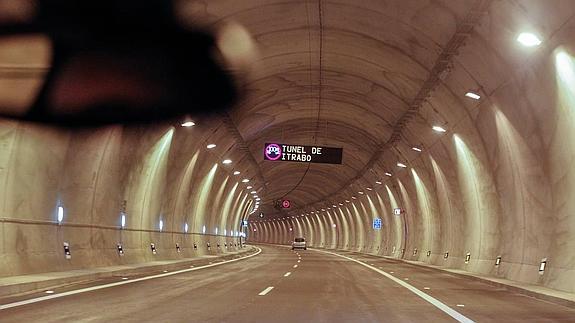
Problems of modern life are often blamed on ‘technology’, but problems arise not so much from technology itself (a pencil or wheel is a technology) as from its use and purpose.   I’ve just returned from a short holiday in Spain.  The autovia from Malaga, which has been extended over the twenty years I have visited Andalusia, took me speedily towards the Sierra Madre mountain villages.   It has deeply impacted the landscape, but there is beauty in a seamless highway of bridges, tunnels and viaducts that connects and tames the rugged terrain.   It has also boosted Spain’s economy through tourism and national communications. 

In the Sierra Madre, ancient artificial channels known as acequias form a 3,000km (1,800 mile) irrigation network built by the Moors between the 8th and 10th centuries. These Islamic water management techniques made life possible for agrarian communities.  Ancient gates conserved and distributed snow from the height of the mountains, sending scant and seasonal water resources down the acequias into the valleys. In the newly fertile conditions, the abundance of crops introduced by the Moors thrived, among them almonds, artichokes, chickpeas, aubergines, lemons, pomegranates, spinach, quince, walnuts and watermelon.  The system subsists, though some acequias have been abandoned through population change. As climate change worsens, this traditional water management system will become even more important in helping communities in the Sierra Nevada cope and equitably share an increasingly scarce and unpredictable resource.

Returning to Bristol airport brought me up against a new technology: Artificial Intelligence as applied to passport control.  About a hundred returning passengers shuffled towards the gates of the passport reading machines.  A large animated notice explained that the technology would speed up entrance into GREAT Britain (‘GREAT’ in huge letters).  The few airport staff present were engaged in making the process work, advising people how to insert their passport into the reader, look straight at the camera, and so on.  It was distinctly not quicker than inspection by a human being.   But it doubtless reduces employment costs, reducing former immigration officials to machine minders.  This too is an ancient technique. As Dr Andrew Ure wrote in The Philosophy of Manufactures (1835):

It is in fact the constant aim and tendency of every improvement in machinery to supersede human labour altogether, or to diminish its cost.

Reading Joey Wallace

Falling for Women is a collection of stories about men’s relationships with women – and women’s relationships with men, of course; but the narrators (there are 24 stories) always appear to be male. For reasons of time and space, I’ve referred in this review mainly to stories from the first section of Falling for Women, titled “Sentimental Journeys”. These stories all relate journeys into memories – many of these memories of physical journeys – that carry strong affective meaning for the narrators; and, I guess, for the author. They raise the question: How to read these multi-layered stories by an author who claims affinity with Lawrence Sterne?  Each story features a different woman, and the author writes in the introduction that the women are centre-stage; but the way of telling brings the narrator to the reader’s consciousness.

The first story, Iemanjå, begins by describing a boy’s first days at school.  The boy’s name Wallace – the author’s surname – suggests this is autobiographical, and simple joined phrases imply a childish view (“On the desk was an exercise book and a pencil and a little bag his mother had sewn together”). Wallace moves on to a girl-free boarding school, joins dance classes to meet girls, and is initiated into sex by a girl much older than him. At this point, the narrator becomes a social media commentator:  “I expect you’ll all have read Wallace’s so-called autobiography by now, or at least the reviews.”  And the reader is now positioned as a member of a knowing audience.   These shifts of perspective occur throughout the stories.  When the author gives his surname to the protagonist, we might feel we’re meeting the same character at various ages and stages of his life; but there are chronological gaps and uncertainties. Some of the stories an be read plausibly together as episodes in one life; others seem to be about someone else.  The sixth story, Laura, is preceded by an Editor’s note that throws doubt on its provenance and author and queries why certain elements of the narrative remain unexplained. 

Despite – or perhaps because of – these writerly manipulations, the stories are compelling.  The protagonists are energetic, educated, usually young men with with a hunger for experience, often travellers in the Land of the Free.  Sometimes the narrative stretches credibility even as fiction, as in Mitzi, where Wallace, a young Brit in Las Vegas, gives cardiopulmonary resuscitation to a stricken croupier, is picked up by a kind “crowd warmer” called Mitzi, and given a stage-side view of Tom Jones’ performance; then Elvis Presley joins Wallace in Tom Jones’ dressing-room.  America is mythically a country where anything is possible, but Wallace feels after these events that the whole Las Vegas experience was unreal.  What would remain real, however, was the smiling eyes and aching allure of Mitzi. The character and presence of Mitzi outshines Las Vegas.   In later years, we are told, Wallace would come to understand innocence not as a condition that would always be lost, but as a compassion that could always be achieved.  This trope occurs in some of the other stories, and feels like an insight into the mind of the author as well as the narrator.

So as the reader of these stories I try to enter the immanent mind of the author. What lies behind these heterogeneous narratives?  The narrator usually refuses to comply with the reader’s desire for answers.   He often says that he doesn’t know. The narrator is at pains to halt the reader’s suspension of disbelief in the veracity of the story, or even its internal consistency.   The main subject about which he claims ignorance – an ignorance that, he claims, is shared by all men – is women.  In The Black, the White and the Freckled, Wallace reflects on his strange romance with the Norwegian Astryd, and “the multiple layers of illusion it had begun to reveal”.  After his time with her, he feels that “her sweet simplicity, her innocence, the smile that talked to him of love”, were unreal, “symptoms of an essential lack”.  He tells the reader it was at this point he had the idea of writing about falling in love, or indeed about falling for women.  We hear the author relating – in (semi-)fictional form? – the provenance of these stories.  The ambiguity of ‘falling’ suggests not only romance but danger.  Astryd had never been present to Wallace.  Danger is associated with the female even in infant school. In the first story, Iemanjå, six year old Wallace bumps into a neighbouring girl’s desk, dislodging her spectacles;  she scratches and spits at him and feigns injury when Wallace pushes her away.  Wallace has to stand in the headmistress’s office at break time to  “learn how to behave”.  He learns, says the narrator, that girls could be trouble.

In Katharine and Jacqueline the boy protagonist isn’t given a name, but, like the young Wallace in Iemanja, he initially has little interest in girls; Richmal Crompton’s William is referenced in both stories.   “At that time,” the male narrator overgeneralises, “boys lived in a boys’ world.”  This world is vividly and poetically created.  The boys lived and played outdoors all day every day, scampered, climbed, fell or fought; they roamed, “got lost in the woods, went scrumping for apples, trolleyed and roller-skated along the main roads”; at summer funfairs ”they roamed the diesel-noisy rides”.  The experienced adult narrator reminds us that this was a wounded and exhausted post-war world, but the boy lived an “unencumbered and unreflective” life in a “fierce freedom”.  Like other boys, we are told, he was “innocent” of the lives of girls – until Katharine, a girl from his class, invited him to a tea-party in the garden of her parents’ substantial house. Nothing in the boy’s short life had prepared him for the girls’ “presence and proximity”.   Their smiles, smirks, squeals and giggles were utterly different, but he liked the gestures, the looks, the “small courtesies”.  He had been seduced, but he had to get back for lunch with his mother and crashed his bike in his haste and speed.   Despite this final boyish assertion, he found himself thinking about the girls’ world and what it all meant. 

Donna, the ostensible subject of the story of that name, is also mysterious.  The first-person narrator cannot recall how she, sleepy and uncannily passive, joined two British kids, him and his mate Steve, riding Chicago in Steve’s ’57 Chevy.   The main action of the story relates Steve and the narrator’s getting tickets and going to see Ray Charles perform in the Regal Cinema on the southside.  Although they hardly knew Donna, they didn’t want to leave her.  “She was the emissary from the strange land of America.”  There was no promise of closeness, but she “had a young girls’ mystery”.  Still, they dropped her off, entered the auditorium early, and fell asleep; they awoke to the overwhelming presence of the all-black audience and Ray Charles.  The narrator needed to urinate.   Sheer desperation gave him, a young white, the strength to take his place at the trough and pee.  After having experienced something that evening that few or none white boys of that time would have experienced, the boys never gave a thought to Donna.  Yet now she hovers in the narrator’s – and, it seems fair to suggest, the author’s – mind as someone who “stood on the threshold of our age of the troubled self, restless, unfulfilled and incomplete”. 

This story presents a paradoxical juxtaposition.  The narrator relates a hugely memorable, powerfully masculine coming of age experience; yet it is a short, uneventful encounter with a young woman that he still ponders.  Like Mitzi in Las Vegas, Donna outlasts the adventure in the narrator’s memory.  In these stories, the satisfactions of the masculine world first experienced as a boy are insufficient; the presence of woman is still desired.  But when Wallace decides to leave Astryd in The Black, the White and the Freckled, he finds compensation in dreams of the “thrill and the sweet diesel smells and the throbbing machinery” of his urban boyhood.  These memories – similar to those evinced in Mitzi – appeared more real than the days he had spent with Astryd.  

When Wallace meets Chantal in the final pages of The Black, the White and the Freckled, this paradox is, at least for the moment, resolved.  With Chantal, Wallace is content: a soft, sexy and willing woman by his side, his bike back on the road, and money in his pocket.  Wallace likes her directness and honesty.  He loves Chantal’s body and regards her without ambivalence, making love considerately, taking care not to hurt, not to bruise.  Such compassion is Falling for Women’s definition of innocence.  Wallace had an inkling that “right now he was a happy man”: a statement that contains a worm of impermanence. 

The story that presents most achingly a difficult prolonged relationship is Cheshire.  Differences of viewpoint – conscious or unconscious – between the author and the narrator are present but hard to discern.   Narrated in the first person by Wallace, this story relates, apparently autobiographically, the story of Wallace and Cheshire (his pet name for her smile). Meeting as students at different universities, they build a soundtrack to their lives.  “Certain songs,” Wallace tells us, “like the Otis Redding version of ‘Try a little tenderness’ or Aretha Franklin’s ‘Natural Woman’ – all that was heartrending and romantic – can still stop my heart for a beat or two.” He is clearly a romantic.  Here there is a crucial pause in the narrative as Wallace reflects on “the age-old failure of women and men to understand each other”. While admitting that stories of this failure suggest that “the heady emotions of falling in love can only multiply the misunderstandings, rather than resolve them”, he believes in moments of breakthrough, “when a man and a woman suddenly make sense to each other”.  Does the story relate such moments of mutual comprehension, or does love remain illusory?

Cheshire too is a romantic: when the students return to their respective seats of learning, she sends Wallace a letter stuffed with rose petals.   Wallace opens it in the porters’ lodge of his college and gets a “fondly old-fashioned look” from the porter as he “drifted dreamily into the quad, embarrassed but uncaring, a blithe spirit”. He buys an ancient Vespa scooter to make the four hour journey to visit her; she takes him up to her bed.  The rendering of this first night of intimacy, which is not immediately sexual, and the moment in the morning when Cheshire pretends shock at his erection, lend the story a strong plausibility.  Wallace tells us that he can still “hear” the question and capture this moment when he realised “what a lovely girl she was and how much I loved her, though I did not know it then in the way that I know it now”.  The denouement, however, questions this assertion of love. 

The following year Cheshire joins Wallace in his university lodging, and he feels, for the first time in his life, “the peace of being at home”.   Their love seems perfect: to Wallace “her sexual allure had never ever been separate from her whole self; and our lovemaking let me know it was the same for her”.  He tells us that he is trying to capture “the essential innocence of our feelings for each other”. Innocence implies unattained experience, and, in the next sentence, the narrator anticipates the end of the relationship: “I lost it oh so easily, with no sense of its worth, of its rarity, of fathomless well of longing its loss would bring.”  But where in his mind is the other, the object of this “well of longing”?  

What happens next is, to this reader, predictable: Wallace gains a studentship in the US and wants to move on.  When the rose petals fall from Cheshire’s first letter, he feels disaffection.  Her nostalgia holds him back.  “I was here in America, and I had to make my way forward.”   He stops writing to her, but the separation he needs wreathes him in guilt. He claims he cannot explain what he did or why, but, again to this reader, his desire to move on seems wholly explicable, as does his admission that the attachment did not end there: “I did not have the courage and self-reliance to leave it alone.”  There follow many years of mutual returns and partings, a history for which he castigates himself.  He credits Cheshire with the quality of innocence described in other stories – achieved through kindness, empathy and compassion – but sees himself as a natural backslider like “most of us”, who “rapidly return to the main business of pleasing and justifying ourselves”.  Less self-punitively, he states he was “neither man enough to walk away and stay away, nor human enough to reach across the divide … and affirm my wish to be there for her”.   He concludes, though that the relationship was never “all about me”.  The moment of breakthrough early in the relationship was truly “all about us”. The narrative has implied, though, that this romantic togetherness was too illusory to be sustained.  

The first person narration of a long relationship conveys the contradictions of the inner dialogue of lived experience.  The self-deception of Wallace’s romantic nature is subtly presented.   Or so it seems to me.  Like any other reader, I’m finding something of my own narrative in these stories.  Further reading of the subsequent sections might create a different impression of the overall enterprise.  But these later stories too will repay reflective reading, demanding the reader – of whatever gender – attend to the subtle complications of men’s falling for women.  

We’re all working class now

Liz Truss recently complained about a lack of ‘graft’ displayed by British workers, and it seems that, if she becomes prime minister, she may select Jacob Rees-Mogg as the Secretary of State for Levelling Up. At a time when millions of industrious citizens are confronting unearned poverty, Truss is confident that they will be happy to be insulted and patronised by those whose main distinguishing feature, in addition to their power and privilege, is their unearned income.

Despite populist attempts to divide the population on the usual issues of class and race, and the new issue of gender identity, it’s becoming clear that the emerging divide in British society is between those who expect to earn their income and those who don’t.  Those who don’t include not only those with inherited wealth and power (some of whom benefit society by philanthropy) but also those who ‘earn’ stock income and bonuses far beyond their need, as directors and shareholders of major corporations. The biggest Insult to the working population is it they should be expected to pay for the profiteering of the energy companies.

The rising anger against these political and executive centres of power and wealth is in part because of their lack of social responsibility.   Over the last few weeks, we have all felt the Earth heating up. Yet politicians and corporations continue to behave as the only issues that matter are short term ends of the election and the bottom line.

People’s anger is palpable. Every day we hear threats of new industrial action.  Yet government regulation of the unions over the last 30 years makes it very difficult to organise a general strike.   However, this new division of ‘haves’ and ‘have nots’ transcends previous class and income barriers.   From bin-men to barristers, numerous groups are claiming that enough is enough.  Indeed, ‘Enough is Enough’ and ‘Don’t Pay UK’ are names of organisations that comprise thousands of protestors whose only common identity is outrage at the unfairness of civil life.  Six years after Brexit, government speaks of malnutrition and hypothermia as if they are the natural but unfortunate side-effects of the greed and profiteering they hold as central to their philosophy.   ‘I’ll cut taxes,’ promises Liz Truss, appealing to her Tory ‘base’.  But we’re all working class now.